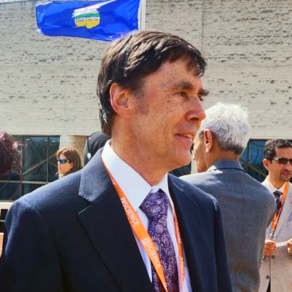
John Karau
John Karau graduated from Brock University in 1973 with a degree in Environmental Sciences . He has extensive domestic and international work experience related to environmental conservation and protection for both the marine and freshwater environments. Internationally John has helped to advance integrated coastal zone management with the International Maritime Organization, the Arctic Council and the United Nations Environment Program. Domestically he has held several Director positions including Sustainable Water Management, Biodiversity Conservation and Oceans Policy. John retired from Environment Canada in 2011 and is staying active as a Board Member of the Mississippi Valley Conservation Authority ( Chair 2014-18 ) and Chairman of the Ottawa EcoTalent Network . He is also a volunteer river watcher with Ottawa River Keeper.
Keynote Abstract
Is Water Management in the Ottawa River SUSTAINABLE?
The Ottawa River Basin is 146,000 square km which is equal in size to England. It flows 1,270 km and for most of its length forms the boundary between the provinces of Ontario and Quebec. The river has been a central highway throughout Canadian history and even before European settlement. Today it is a source of drinking water and home for over 2 million Canadians, provides water for industry, hydro, tourism and recreation, as well as rich and diverse ecosystems.
Unfortunately, it still lacks effective governance for a sustainable future. This despite the ongoing leadership of Ottawa River Keeper and a two year study by the federal government to bring a co-management approach to the Ottawa River Watershed. In short, the political will at senior levels of government is still lacking but the need for more adaptive management in response to the realities of climate change is growing stronger.
With multiple uses of water throughout the Basin the potential exists for conflict between competing users. However, floods remain the costliest events with record breaking flooding in 2017 and again in 2019.
Recent studies have shown that climate change will fundamentally alter the hydrological conditions under which the economic interests and natural heritage systems have developed. The stress on natural systems is growing and ecological services like managing runoff is already compromised. Remaining wetlands will be highly vulnerable to drying, cold/cool water fish species will become displaced, increasing precipitation in fall and winter will lead to greater risk of flooding and higher temperatures will lead to increased frequency and severity of droughts.