
International Conference on Water, Informatics, Sustainability, and EnvironmentGlobal Warming - Global Responsibility
iWISE2019 is a three-day conference hosted at Carleton University, Ottawa on 7-9 August, 2019. The conference is co-organised by Ottawa Assembly of Knowledge and Science Target , in collaboration with local and international academic and professional bodies.
The conference is centered around the themes of water, informatics, sustainability, and the environment; all of which relate to global warming and climate change. Together, conference attendees will draw linkages between these themes, and learn about cutting-edge research, technology and practice in these fields. Field-leading experts will deliver keynote talks, while focused themed sessions will offer the opportunity to delve deeper into specific issues and solutions.
We are excited to welcome a diverse cohort of roughly one-hundred researchers and experts from across the world, representing a variety of organisations including government bodies, academic institutions, and NGOs.
Speaking at iWISE2019
Farouk El-Baz
Honorary Chairperson
Director of the Center for Remote Sensing and Research Professor at the Departments of Archaeology and Electrical & Computer Engineering, and Associated Faculty at the Department of Earth and Environment, Boston University, Boston, MA, U.S.A. Prof. El-Baz was the principal Investigator of the Earth Observations and Photography Experiment on NASA’s Apollo-Soyuz Test Project (ASTP)Among the many awards Dr. El-Baz has received are: the Apollo Achievement Award, Exceptional Scientific Achievement Medal, and Special Recognition Award, all from NASA
Keynote Abstract
Satellite Image Monitoring of Changes to the Environment of the Earth in Space and Time
The space age has opened new vistas for students, teachers and others to acquire, utilize and disseminate information, through cyber-space, in multitudes of forms. It is imperative that we play a significant part in this global intellectual revolution. The boundaries of a school, city of country are no longer confining. Each one of us can reach across the oceans, the whole globe, or outer space to gain and disseminate information for the common good. One significant aspect of knowledge today is the state of the local, regional and global environments. Humans cannot live in harmony with the Earth unless we become familiar with our surroundings and conscious of their changes in space and time. Digital images from space allow us to do so through numerous ways and at all scales. The Internet offers numerous options to view, analyze, download or post the information at no cost. We must all take advantage of this valuable opportunity. Examples are given of the use of space image data in establishing the potential of groundwater resources in the most arid desert regions. Such data include: (1) multispectral images that clearly depict surface features and allow the deduction of their geologic history; (2) thermal images that show the location of rain water accumulation as cool anomalies just below the surface, which may replenish groundwater aquifers. They are also used to identify groundwater seeps along faults in coastal zones that can be harvested before entering the sea; (3) radar data that penetrate the sand cover to reveal buried courses of ancient rivers, whose flow directions indicate potential sites for groundwater accumulation; and (4) elevation data that depict surface water flow in the past as well as in the present. Correlations of such datasets in a geographic information system (GIS) allow defining the best methods to locate and sustainably use the water resources. In addition, such procedures assist is selecting methods to help in measuring changes to the environment due to the actions of human populations worldwide.
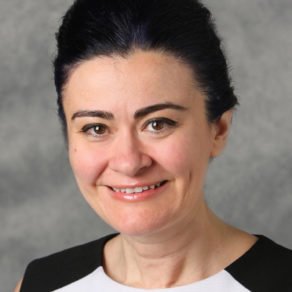
Banu Ormeci
Prof. Banu Ormeci received her Masters and PhD degrees from Duke University in the US. She is a full professor and Jarislowsky Chair in Water and Global Health, and Canada Research Professor in the Department of Civil and Environmental Engineering at Carleton University. She leads an internationally recognized research program on wastewater and biosolids treatment, and is the recipient of several research, teaching and mentoring awards. She is also the Chair of the International Water Association’s Sludge Management Specialist Group. Her research on optimization of treatment processes has resulted in several patents and new processes in the market.
Keynote Abstract
Biosolids Management in Circular Economy: Lessons from around the world
Biosolids treatment and management is a growing challenge for treatment plants globally. The cost of biosolids treatment constitutes to approximately half of the cost of wastewater treatment, and the quantities increase as new wastewater treatment facilities are built and the existing ones are upgraded to keep up with the growing population and stricter regulations that require advanced treatment.
Unlike linear economy that was built on the “take, make and dispose” philosophy, circular economy emphasizes recovering and reusing resources as long as possible. The circular economy concept and its application to biosolids treatment and management has immensely helped to advance the science, research and technology in achieving recovery of nutrients, energy, carbon, and bioproducts from sludge. The European Commission implemented the Closing the loop – an EU Action Plan for the Circular Economy in 2015 and several other countries are now in the process of implementing similar action plans including Canada (e.g., Ontario’s new Strategy for a Waste-Free Ontario: Building the Circular Economy).
Prof. Banu Örmeci is the Chair of the International Water Association (IWA) Specialist Group on Sludge Management which has members from 120 countries. In this presentation, she will share how circular economy is interpreted and implemented in Europe, Australia and Asia, and successful applications and approaches that can also be adopted in North America. These will include new and novel methods for energy and nutrient recovery; source control of emerging contaminants, nanoparticles and microplastics; control measures for pathogens and antibiotic resistant bacteria, and beneficial use of biosolids. The rapidly changing regulatory environment will also be covered including recent bans in Europe on land application of biosolids.

Mariana Esponda
Mariana Esponda is an Associate Professor on the Azrieli School of Architecture, Carleton University, and the coordinator of the Architectural Conservation and Sustainability program since 2008. As well as visiting professor in the European Master of Monuments and Historical Constructions (SAHC) since 2010. Following her training as an architect in Mexico she obtained a Phd in 2004 on the “Assessment of the Intervention with Concrete in Restoration of Historical Buildings in Spain and in Mexico,” completed in the Department of Restoration and Construction at the Polytechnic University of Catalonia, Spain. Dr. Esponda has been working on heritage buildings, in both the private and public sector, for the last 15 years in North America as well as Spain and Italy to fully understand historical constructions and to create new sustainable designs. Her projects include restoration on modernism historical facades, adaptive reuse on churches and monasteries, conditional assessment and rehabilitation on existing structures.
As a teacher and a practicing conservation architect, she is dedicated to expanding knowledge and to train young generations about how to improve the quality of heritage buildings and to readapt these historical constructions with new uses and sustainable historical construction, all the while respecting the structure and traditional materials. Dr. Esponda’s research has focused on developing studies on the interaction between traditional techniques and new materials in heritage buildings, with a special focus on assessment of traditional building technologies and to allow a new life through contemporary use. She also studied reinforced concrete during the modern era in order to identify building technology, language-innovation, signs of deterioration and repair.
Dr. Esponda is exploring a new line of investigation in Sustainable Heritage Conservation, balancing cultural and natural heritage, integrating environmental construction techniques, social and economic practices. During her sabbatical research, she studied in detail different preservation cases from the Laurentians, Quebec. Dr. Esponda tried to explore not only the physical aspects of the square log houses, such as the use of traditional building materials, craftsmanship, and construction techniques, but also the socio-cultural values linked to living conditions, a sense of place, and collective memory of the community. Undoubtedly, these wood structures from the end of the 19th century represent material and social constructs, local values, expressions of Canadian identity, and environmental and economical benefits.
Dr. Esponda has published articles about the Canadian, Spanish and Mexican heritage restoration in Canadian and international journals of architecture.
Keynote Abstract
Natural, social and technical: “savoir-faire” in the Laurentians
There are different approaches to the term sustainability, but I could propose that recognizing architectural strategies which were used in the past and ensured that the buildings are “still standing“ today could be one way to re-value traditional knowledge and to incorporate it into contemporary buildings.
This presentation will aim to describe vernacular architecture from the Laurentians, Quebec as an illustration of sustainability in architecture by analyzing three different aspects that cannot be separated: the natural, the sociocultural and the technical practices and knowledge.
Guillame Thibualt, one of the first pioneers to settle in the region of Laurentians, built his house in 1874 in Lac Duhamel, Mont-Tremblant, Quebec. This ingenious building shows four key features employed in its original construction that can serve as an example of how strong ties to the concepts of place-making and material practice are fundamental to ensure the “permanency” of architecture. The first thing that Thibault did was to cut the dovetails so that they caused the water to flow outward; secondly, he tilted the walls slightly inward at the top like a house of cards; thirdly, he put into place five beams shaped like spindles to hold the walls in place, as they tend to open up with the weight of the snow; and finally, he inserted wooden pegs two inches in diameter so that the top pieces wouldn’t move with the weight of the snow1. Thibault’s design and the other remaining buildings in the Laurentians area have respected and properly responded to the harsh Quebec environment, by employing traditional knowledge and technologies to maintain thermal comfort through aspects such as embodied energy and embodied carbon, use of local building materials and passive system like natural and cross ventilation, orientation and daylight.
In the last fifteen years, the Laurentians have seen a rapid growth in population and new housing developments. The future development of many areas has become a major concern, with the threat to the natural environment and the neglect of existing buildings with high cultural, historical and technical significance which may soon be lost. Consequently, a new awareness that identifies successful traditional practices used in existing buildings, that seamlessly bring together the natural aspects of the site with the cultural knowledge of the community, could allow us to develop a new meaning of sustainability. This new understanding would consist of re-valuing and reworking old solutions and traditional knowledge into modern, suitable ones which can be applied to contemporary architecture.
James Birtch
Promoter of Community-based Sustainability

Dale Marshall
Dale grew up in northeastern Quebec, roaming the boreal forest that began at his family’s backyard fence and, during the one month it was possible, splashing around the North Atlantic. While undertaking a mechanical engineering degree at McGill University, Dale discovered he was much more interested in the natural world and the systems needed to let it flourish than working on built environments. This realization led to a degree in environmental science, followed by a master’s degree in resource and environmental management at Simon Fraser University. For 15 years, Dale has worked on environmental protection, mostly related to energy and climate change. Policy research and advocacy in Vancouver and Ottawa was followed by two years in Cambodia to assist people and communities most vulnerable and impacted by climate inaction. As National Program Manager at Environmental Defence, Dale works to move Canada towards greater action and responsibility on climate change and towards clean, modern renewable energy technologies, while phasing out all fossil fuels such as oil, coal, and natural gas
Keynote Abstract
Resolving global climate inequity through large-scale climate financing and community-based solutions
It is generally understood that those that are least responsible for the problem of climate change are those who have been hit first and hardest. However, it is rarely acknowledged in industrialized countries such as Canada the degree to which global solutions like the Paris Agreement on climate change fail to fully address this global inequity. Countries’ mitigation commitments begin with grandfathering high levels of carbon emissions. Meanwhile the differential impacts of climate change, and their imposed costs, are only minimally resolved.
For communities in the developing world, the impacts of climate change are often linked to water and water resources: not enough, too much, poor quality, etc. Access to clean water is a human right and fundamental to community wellbeing. This is why resolving climate inequity must include a full, comprehensive approach to water access for all.
The Paris Agreement acknowledges climate equity issues but only minimally addresses them. Over the coming years, commitments and action need to be ramped up to avoid catastrophic impacts in the developing world, and global instability.
In addition to greater mitigation commitments, higher levels of climate financing are needed to allow developing countries, especially least developed countries, to both address the mounting impacts of climate change and undertake low-carbon development. The solutions need to be participatory and community-based in order to integrate technological solutions that are appropriate. Significant resources are also needed for capacity building, including at the local level.
About the Author. Dale grew up in northeastern Quebec, roaming the boreal forest that began at his family’s backyard fence and, during the one month it was possible, splashing around the North Atlantic. While undertaking a mechanical engineering degree at McGill University, Dale discovered he was much more interested in the natural world and the systems needed to let it flourish than working on built environments. This realization led to a degree in environmental science, followed by a master’s degree in resource and environmental management at Simon Fraser University. For 15 years, Dale has worked on environmental protection, mostly related to energy and climate change. Policy research and advocacy in Vancouver and Ottawa was followed by two years in Cambodia to assist people and communities most vulnerable and impacted by climate inaction. As National Program Manager at Environmental Defence, Dale works to move Canada towards greater action and responsibility on climate change and towards clean, modern renewable energy technologies, while phasing out all fossil fuels such as oil, coal, and natural gas.

John Karau
John Karau graduated from Brock University in 1973 with a degree in Environmental Sciences . He has extensive domestic and international work experience related to environmental conservation and protection for both the marine and freshwater environments. Internationally John has helped to advance integrated coastal zone management with the International Maritime Organization, the Arctic Council and the United Nations Environment Program. Domestically he has held several Director positions including Sustainable Water Management, Biodiversity Conservation and Oceans Policy. John retired from Environment Canada in 2011 and is staying active as a Board Member of the Mississippi Valley Conservation Authority ( Chair 2014-18 ) and Chairman of the Ottawa EcoTalent Network . He is also a volunteer river watcher with Ottawa River Keeper.
Keynote Abstract
Is Water Management in the Ottawa River SUSTAINABLE?
The Ottawa River Basin is 146,000 square km which is equal in size to England. It flows 1,270 km and for most of its length forms the boundary between the provinces of Ontario and Quebec. The river has been a central highway throughout Canadian history and even before European settlement. Today it is a source of drinking water and home for over 2 million Canadians, provides water for industry, hydro, tourism and recreation, as well as rich and diverse ecosystems.
Unfortunately, it still lacks effective governance for a sustainable future. This despite the ongoing leadership of Ottawa River Keeper and a two year study by the federal government to bring a co-management approach to the Ottawa River Watershed. In short, the political will at senior levels of government is still lacking but the need for more adaptive management in response to the realities of climate change is growing stronger.
With multiple uses of water throughout the Basin the potential exists for conflict between competing users. However, floods remain the costliest events with record breaking flooding in 2017 and again in 2019.
Recent studies have shown that climate change will fundamentally alter the hydrological conditions under which the economic interests and natural heritage systems have developed. The stress on natural systems is growing and ecological services like managing runoff is already compromised. Remaining wetlands will be highly vulnerable to drying, cold/cool water fish species will become displaced, increasing precipitation in fall and winter will lead to greater risk of flooding and higher temperatures will lead to increased frequency and severity of droughts.

John McEwen
John McEwen was first elected to the Village of Anmore Council in 2008, and elected Mayor in 2014. During his tenure on Council, John has chaired various Committees within his municipality and has been appointed to Regional Parks, Performance and Audit, and Regional Planning at Metro Vancouver.
John’s business background has helped assist the Village of Anmore to eliminate its approx. infrastructure deficit of close to 11 million dollars through strong fiscal management.
John currently owns and operates a small business Save On Laser located within Port Coquitlam. The business remanufactures laser printer cartridges for resale, as well as services and sells printers in an effort to minimize impact on the landfill.
John is a Board Director with Metro Vancouver, a federation of 21 municipalities, one Electoral Area and one Treaty First Nation. He is also the Chair of the Metro Vancouver Regional Parks Committee and a member of the Metro Vancouver Finance and Intergovernment and Water Committees.
John is married to Kerri, has three amazing teenage kids pursuing various academic paths, and three amazing dogs.
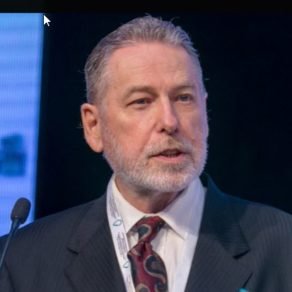
Terence Cooke
Mr. Cooke worked for Canada`s Federal government for many years, mainly in the area of environmental reviews of development projects. Previous to that, he was the science officer at the Canadian Commission for UNESCO. He has supported voluntary sector organizations throughout his career, latterly as a founder and president of the organizing committee of the not-for-profit Ottawa EcoFair, an annual event that provided a low cost public showcase for the Ottawa area’s emerging environmentally focused companies and organizations; and more recently with the Ottawa Biosphere EcoCity organization.
iWISE2017 Testimonials
Full of informative and inspiring sessions, with opportunities to meet highly skilled, and professional people
I enjoyed the conference tremendously and found it very informative
iWISE Conference is a fully immersive experience that is truly best of its kind. I thoroughly enjoyed the last iWISE Conference and am much looking forward to attending again next year. If you’re not attending iWISE2017 Conference, you’re missing out.

Proposal Submission deadline July 10, 2019
Deadline for online presentations: July 17, 2019
Full Program
Click on a session title for more details
Master of Ceremonies – James Birtch, Ottawa Biosphere Eco-City Initiative – Founder & Former Chairman, CANADA
Welcoming Speech. Terence Cooke, Vice President, Ottawa Assembly of Knowledge (OAK), CANADA
001KNA: Satellite Image Monitoring of Changes to the Environment of the Earth in Space and Time. Farouk El-Baz, Professor, IWISE2019 Honorary Chairperson, Member of the President’s Advisory Council, Arab Republic of Egypt, Director of Center for Remote Sensing, Boston University, USA
007KNA: Metro Vancouver’s Five Year Outlook. John McEwen, Metro Vancouver Board Director, Chair, Metro Vancouver Regional Parks Committee and Mayor, City of Anmore, CANADA
002KNA: Biosolids Management in Circular Economy: Lessons from around the world. Banu Ormeci, Professor and Jarislowsky Chair in Water and Health, Director, Global Water Institute Canada Research, Department of Civil and Environmental Engineering – Carleton University, CANADA
003KNA: Is Water Management in the Ottawa River SUSTAINABLE? John Karau, Chairman, Ottawa EcoTalent Network – Board Member of the Mississippi Valley Conservation Authority, CANADA
Introductory Video about Prince Sultan Bin Abdulaziz International Prize for Water (PSIPW), SAUDI ARABIA
Q&A Discussion
, Farouk El-Baz , John McEwen, Banu Ormeci, John Karau
Chair – Prof. Farouk El-Baz, iWISE2019 Conference Chairman – Boston University, USA
263WAT: Prediction of Summer Rainfall over Lake Tana Tele-connected with Global Sea Surface Temperature. Asmaa Alhamshry, JAPAN
339WAT: Selecting the Best Electrical Parameters to Run an Electrocoagulation Process Treating Activated Sludge Solution. Khalid Bani-Melhem, JORDAN
347WAT: The Investigation of Soil Erosion on Natural Grasslands and Subsistence Agricultural Crops at Fountain Hill Estate, Wartburg, Kwazulu-Natal. Gugulethu Tshabalala, SOUTH AFRICA
381WAT: Pharmaceuticals and Personal Care Products as Emerging Pollutants in Water. Abdul Jabbar Al-Rajab, CANADA
370WAT: Modeling on Toxic Algae Bloom in the Aquatic Ecosystem and Water Quality Problems in Asian Countries. Md. Islam, BANGLADESH
290WAT: Bias Correction of Daily Satellite-based Rainfall Estimates Over Egypt. Tamer Gado, EGYPT
260SUS: Concrete Structures and the Aggressive Environments: Experimental and Numerical Simulation. Fouzia Bouabdallah, ALGERIA
Q&A Discussion
Chair – Prof. Banu Ormeci, Canada Research Chair in Wastewater Treatment Engineering, Carleton University
404INF: Linear Maps for Modelling Tracer Transport: A Mathematical Review. Peter Mills, CANADA
408WAT: Development Technology of Rainfall Data Production Using the Optical Rain Sensors of Moving Car based on Big Data. Byung Hyun Lee, KOREA
368WAT: Assessment of the Self-Purification Capacity of Trace Metals in the Klip River (Gauteng), South Africa. Lobina Palamuleni, SOUTH AFRICA
419WAT: Geogenic Arsenic and Microbial Contamination in Drinking Water Sources: Exposure Risks to the Coastal Population in Bangladesh. Ratnajit Saha, CANADA
425WAT: The Effectiveness of Traditional Water Purification Methods in Sudan. Hisham Hassan, CANADA
412WAT: Assessing the Impact of Climate Change on Groundwater Quality of Shallow Coastal Aquifer of Eastern Dahomey Basin Using Seasonal Biogeochemical Processes of Nitrate, Sulphate, Iron and Manganese. Jamiu Aladejana, UK
369SUS: Modeling on Impact of Marine Pollution and International Regime Creation Challenges in the Bay of Bengal by Using MEC Model. Md. Islam, BANGLADESH
Q&A Discussion
Chair – Prof. Mal Dissanayake, Lakeland College, Alberta, CANADA
004KNA: Resolving Global Climate Inequity through Large-scale Climate Financing and Community-based Solutions. Dale Marshall, National Climate Program Manager – Environmental Defence, CANADA
005KNA: Natural, Social and Technical: “savoir-faire” in the Laurentians. Mariana Esponda, Associate Professor, Coordinator of Conservation & Sustainability Program Azrieli School of Architecture & Urbanism, Azrieli School of Architecture, Carleton University, CANADA
006KNA: Help Society Embrace Sustainability. James Birtch, Ottawa Biosphere Eco-City Initiative – Founder & Former Chairman, CANADA
Q&A Discussion
, Mariana Esponda, James Birtch
Chair – Will Eldin, Ottawa Assembly of Knowledge, CANADA
422ENV: From the Skies to the Streets: An Ethnography of Street-based Populations in Metro Manila, Philippines and Local Knowledge Systems Regarding Environmental Pollution and Climate Disaster Risks. Emma Porio, PHILIPPINES
423ENV: B-Spline Interpolation on the Scoring Procedure of Numerical Indicators in Developing Soil Quality Index (SQI). Rahma Anisa, INDONESIA
411WAT: Is Market-Oriented Approach Feasible for Groundwater Management in India? – Lessons from International Experience. Akshi Bajaj, INDIA
373WAT: Characteristics and Extent of Physical, Chemical and Biological Properties of Bhima River in India. Amar Dhere, INDIA
413SUS: Macro to Micro Direction of Sustainability: An Economist Perspective. Kiran Nair, UAE
Q&A Discussion
424SUS: Economic Considerations and Adoption in Enhancing Sustainability of Small-Holder Integrated Agriculture-Aquaculture Systems in Cameroon: Achievements and Lessons Learnt. Benedicta O. Mbu Oben, CAMEROON
283ENV: 3D Flow Patterns and Pollutants Transport Mechanisms in Urban Drainage System. Kamaran Hama, IRAQ
431ENV: Extreme Precipitation Variability in Tunisia. Haifa Feki, CANADA
Chair – Dr. Abdul Jabbar Al-Rajab, Etcetera Publications, CANADA
255SUS: Role of Social Media in Managing the Chennai (India) Floods of 2015. Arul Aram, INDIA
294WAT: Bias Correction of Regional Climate Model Simulations of Temperature in Egypt. Tamer Gado, EGYPT
237ENV: Spatial Distribution of Heavy Metals in Asaluyeh Port, Persian Gulf Using Geographic Information System. Abbas Hani, IRAN
315INF: Estimation of Carbon Dioxide (CO₂) Emissions from Land Use Land Cover Changes Using Remote Sensing Data. A Case of Mbarara District in Uganda. Fidel Uwizeye, UGANDA
244ENV: An Improvement in Non-Conventional Energy Resources Efficiency Using Green Computing. Amandeep Kour and Ranjeet Singh, INDIA
Q&A Discussion.
Chair – Dale Marshall, National Climate Program Manager – Environmental Defence, CANADA
367WAT: Wastewater Treatment and Management, Sunon Asogli Power Ltd Experience. Yaw Acheampong Osei, GHANA
275SUS: Examining the Lagos Green Initiative; A Case Study of Kosofe Local Government Area. Anjolajesu Ayinde, NIGERIA
365ENV: A Risk-Based Approach to Produced Water Management in Oil and Gas Operations. Almat Kabyl, KAZAKHSTAN
418WAT: Exploring Suitable Sites for Installing Safe Drinking Water Wells in Coastal Bangladesh. Ratnajit Saha, CANADA
266SUS: Economics of small-scale, emission-free hybrid renewable energy systems. Amin Ghobeity, CANADA
Q&A Discussion
Chair – Terence Cooke, Ottawa Assembly of Knowledge, CANADA
298SUS: Utilization of Land Use Plan towards the Expansion of Sustainable Landscape in Arid Areas (ETM+ Satellite Image Processing with the Help of Competitive Neural Network (Case Study: Dasht- E- Varamin, Iran Plateau). Nina Almasifar, IRAN
246SUS: Urbanisation and Improper Solid Waste Disposal System in Saki: A Threats to Human and Sustainable Development. Olufola Elegbede, NIGERIA
430ENV: A Case Study: Environmental Site Assessment of a Fire Training Site in Alberta, Canada. Mal Dissanayake, CANADA
284ENV: Children and Youth’s Perceptions of the Environment Following Disaster: The 2013 Alberta, Canada Flood. Caroline McDonald-Harker, CANADA
Q&A Discussion
Schedule and contents of the conference program is subject to change without notice