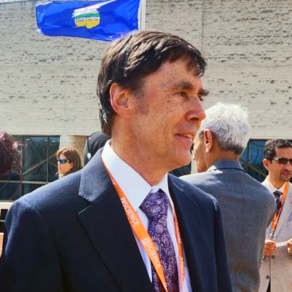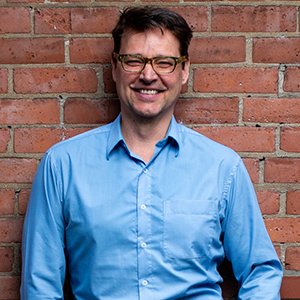
Dale Marshall
Dale grew up in northeastern Quebec, roaming the boreal forest that began at his family’s backyard fence and, during the one month it was possible, splashing around the North Atlantic. While undertaking a mechanical engineering degree at McGill University, Dale discovered he was much more interested in the natural world and the systems needed to let it flourish than working on built environments. This realization led to a degree in environmental science, followed by a master’s degree in resource and environmental management at Simon Fraser University. For 15 years, Dale has worked on environmental protection, mostly related to energy and climate change. Policy research and advocacy in Vancouver and Ottawa was followed by two years in Cambodia to assist people and communities most vulnerable and impacted by climate inaction. As National Program Manager at Environmental Defence, Dale works to move Canada towards greater action and responsibility on climate change and towards clean, modern renewable energy technologies, while phasing out all fossil fuels such as oil, coal, and natural gas
Keynote Abstract
Resolving global climate inequity through large-scale climate financing and community-based solutions
It is generally understood that those that are least responsible for the problem of climate change are those who have been hit first and hardest. However, it is rarely acknowledged in industrialized countries such as Canada the degree to which global solutions like the Paris Agreement on climate change fail to fully address this global inequity. Countries’ mitigation commitments begin with grandfathering high levels of carbon emissions. Meanwhile the differential impacts of climate change, and their imposed costs, are only minimally resolved.
For communities in the developing world, the impacts of climate change are often linked to water and water resources: not enough, too much, poor quality, etc. Access to clean water is a human right and fundamental to community wellbeing. This is why resolving climate inequity must include a full, comprehensive approach to water access for all.
The Paris Agreement acknowledges climate equity issues but only minimally addresses them. Over the coming years, commitments and action need to be ramped up to avoid catastrophic impacts in the developing world, and global instability.
In addition to greater mitigation commitments, higher levels of climate financing are needed to allow developing countries, especially least developed countries, to both address the mounting impacts of climate change and undertake low-carbon development. The solutions need to be participatory and community-based in order to integrate technological solutions that are appropriate. Significant resources are also needed for capacity building, including at the local level.
About the Author. Dale grew up in northeastern Quebec, roaming the boreal forest that began at his family’s backyard fence and, during the one month it was possible, splashing around the North Atlantic. While undertaking a mechanical engineering degree at McGill University, Dale discovered he was much more interested in the natural world and the systems needed to let it flourish than working on built environments. This realization led to a degree in environmental science, followed by a master’s degree in resource and environmental management at Simon Fraser University. For 15 years, Dale has worked on environmental protection, mostly related to energy and climate change. Policy research and advocacy in Vancouver and Ottawa was followed by two years in Cambodia to assist people and communities most vulnerable and impacted by climate inaction. As National Program Manager at Environmental Defence, Dale works to move Canada towards greater action and responsibility on climate change and towards clean, modern renewable energy technologies, while phasing out all fossil fuels such as oil, coal, and natural gas.